Data foundation

Job-market data

See what companies are building through the roles they open

A job opening can show the work a company is preparing to do, the skills it needs, and the technologies in its environment. Queast keeps that evidence connected to the account without pretending every vacancy is a buying event.

Source Role evidence Work, skills, date and location
Context Account story Company, people and activity
Analysis Patterns over time Reinforcement, change and uncertainty

Start with visible demand

Move from a listing to a research question

Review available roles by company, location, recency, skills, and technologies. Search and filters help narrow the market view; the role and its posting context remain available for inspection.

  • Role and company
  • Location and posting context
  • Skills and technology labels
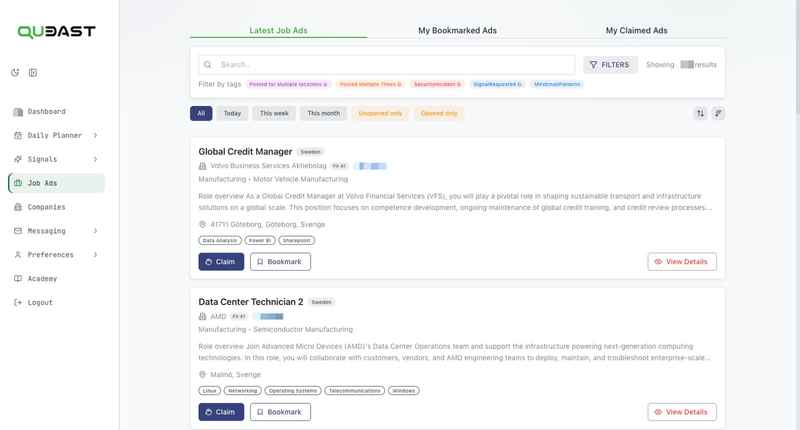
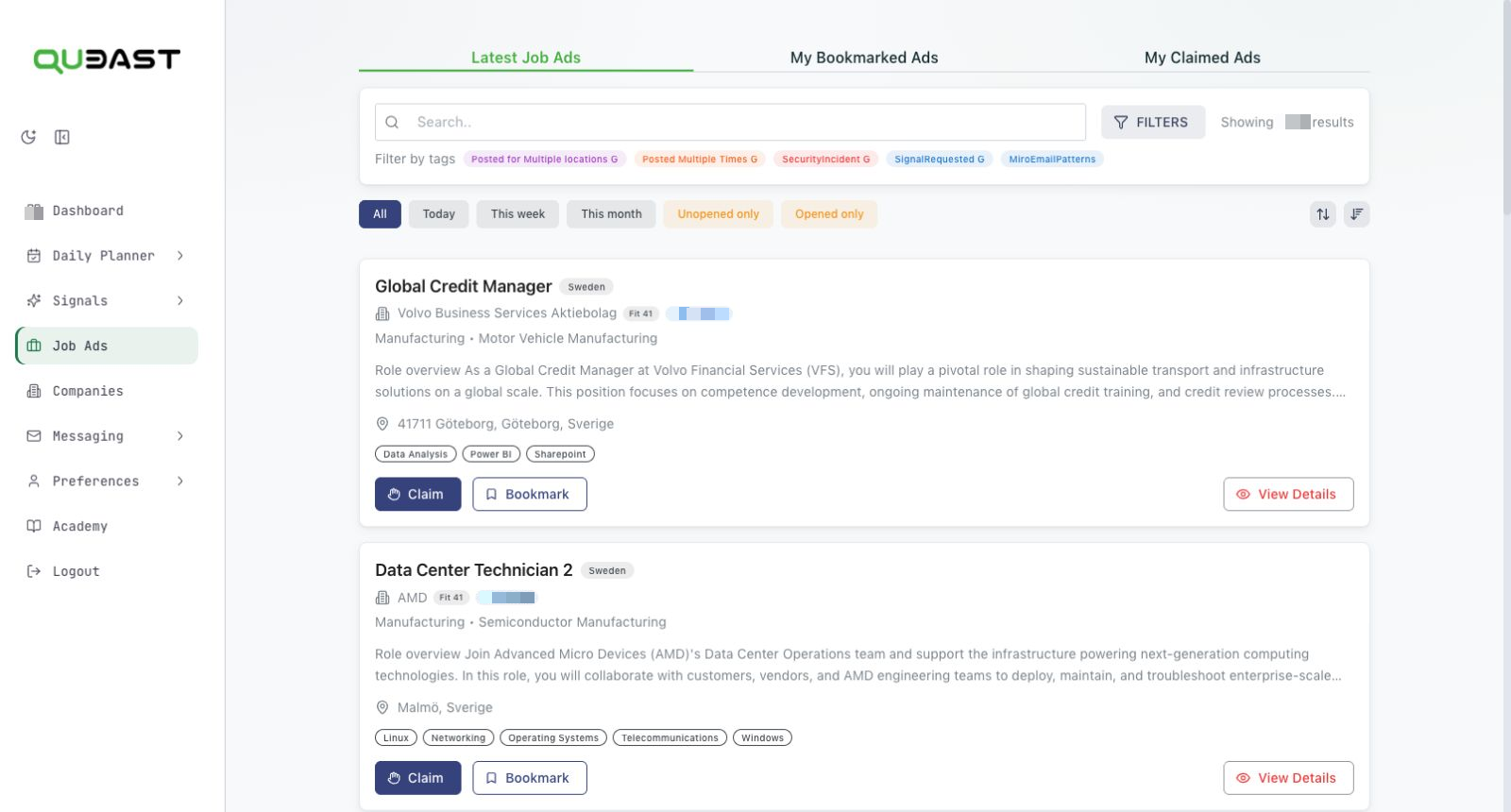
Queast job-market listing with search, filters, company names, locations, and technology labels
Product evidence: job-market search and role summaries remain visible together.
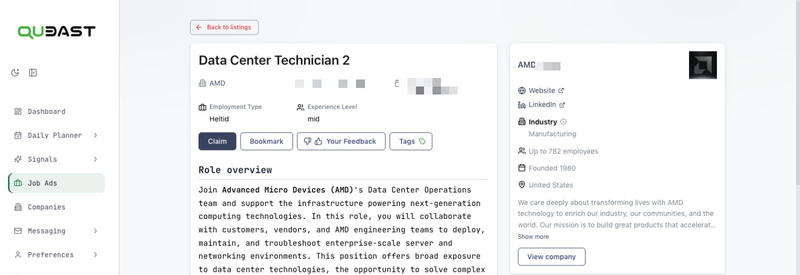
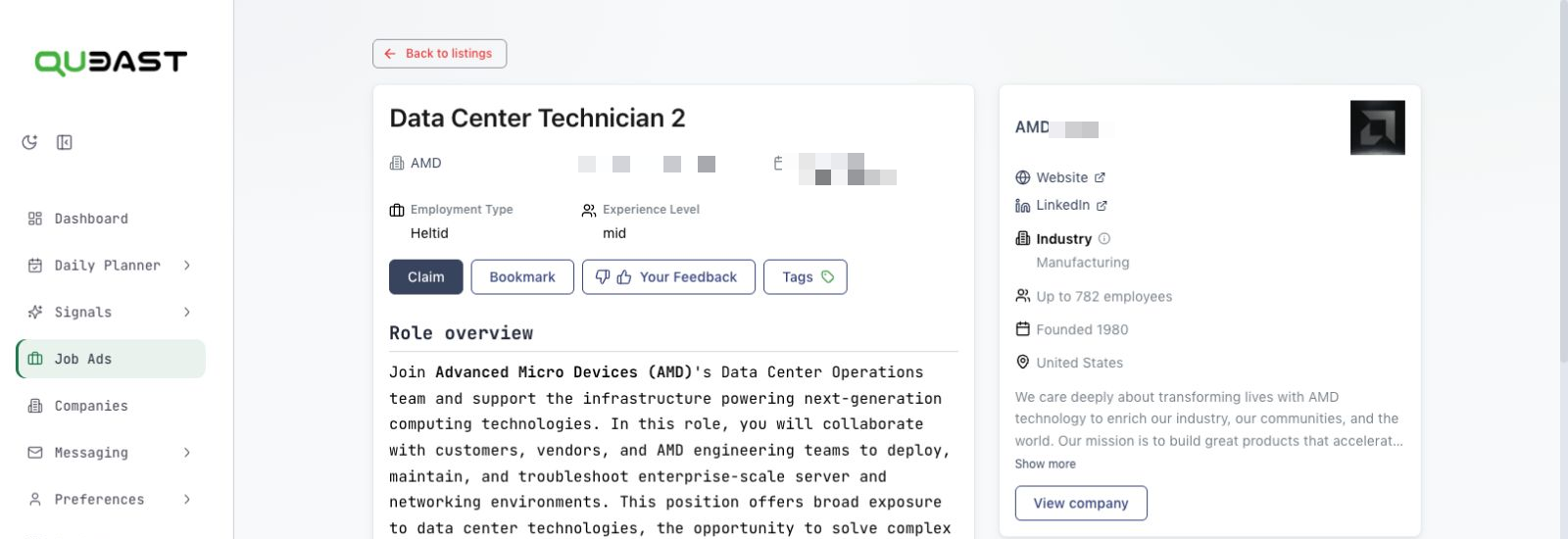
Queast job-detail view placing the role description beside company, technology, and people context
Product evidence: the original role sits beside supported account context.

Inspect the source

Read the role beside the account

Open the role to review its description, responsibilities, requirements, location, company profile, technology context, and visible people. This helps a seller investigate who may understand the initiative. It does not identify a budget holder from the job ad alone.

Role and responsibilities
The work described by the employer
Company and location
The account and operating context
Skills and technologies
Visible requirements that qualify the environment
Available people context
Visible roles to guide further research

Analyse with restraint

Look for reinforcement across roles and time

One opening is one observation. Related roles across a company or market may support a stronger interpretation when the pattern persists, connects to other evidence, and stays current.

  1. 01

    Role evidence

    Record what the opening says, when it appeared, and which company posted it.

  2. 02

    Pattern analysis

    Compare related roles, skills, technologies, locations, and timing without treating a tag as intent.

  3. 03

    Account context

    Add supported company, people, news, social, and technology evidence to test the interpretation.

Evidence boundaries

A job ad can contribute to a recommendation. It cannot create one alone.

Queast preserves the authority of each stage so a seller can see what was observed, what the analysis suggests, and why a next action is or is not supported.

Observed

Source evidence

A visible role, its content, date, company, location, skills, and technology mentions.

Interpreted

Analysis

A time-aware interpretation that compares related evidence and keeps uncertainty visible.

Eligible

Actionable Signal

A recommendation only when the relevant Composite Intent is active and fit, eligibility, capability truth, conflicts, freshness, and evidence checks pass.

Technology mentions qualify the context. They do not prove pain, fit, budget, or purchase intent.

Continue the investigation

Put the role in the account story

Explore the company context around hiring activity, or talk with Queast about the evidence your team needs to research.